What does biodiversity mean in the context of a city like Bengaluru, where the most important topics of discussion and news are traffic, water and real estate? Does this rapidly expanding and concretizing city still hold biodiversity of note, or are they restricted to a few hotspots like Lalbagh, Cubbon park and the increasingly polluted lakes?
In recent years, citizen science applications and portals like iNaturalist, eBird and SeasonWatch have seen a massive surge in usage. This has brought about valuable data on biodiversity in the form of birds, butterflies, bees, bats as well as on trees and plants. Data, not only on the presence of species, but their fruiting and flowering patterns in the case of trees are being documented around the city. What can this data tell us about the state of biodiversity in Bengaluru? The Bengaluru biodiversity datajam sought to answer some of these questions.
Decoding urban biodiversity in Bengaluru Datajam
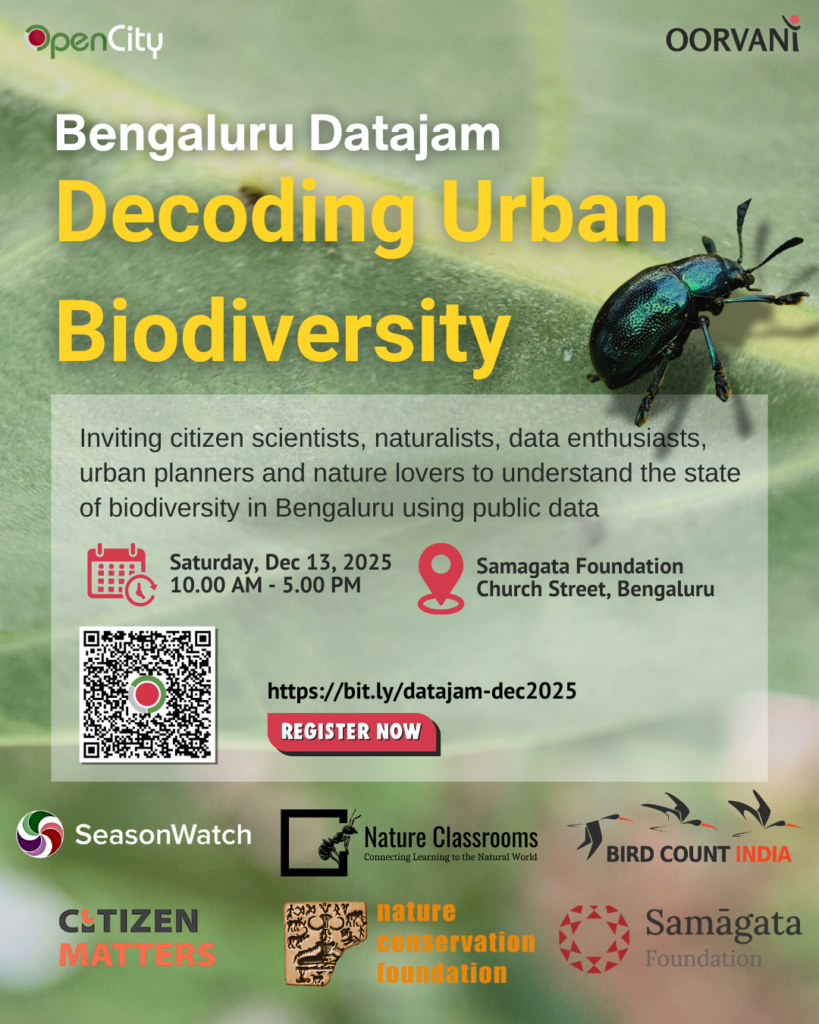
The “Decoding Urban Biodiversity in Bengaluru” datajam was conducted by OpenCity.in in collaboration with Bird Count India, Nature Classrooms and Season Watch. Samagata Foundation were the venue partners for the event held at their space at Church Street, Bengaluru – 560001.
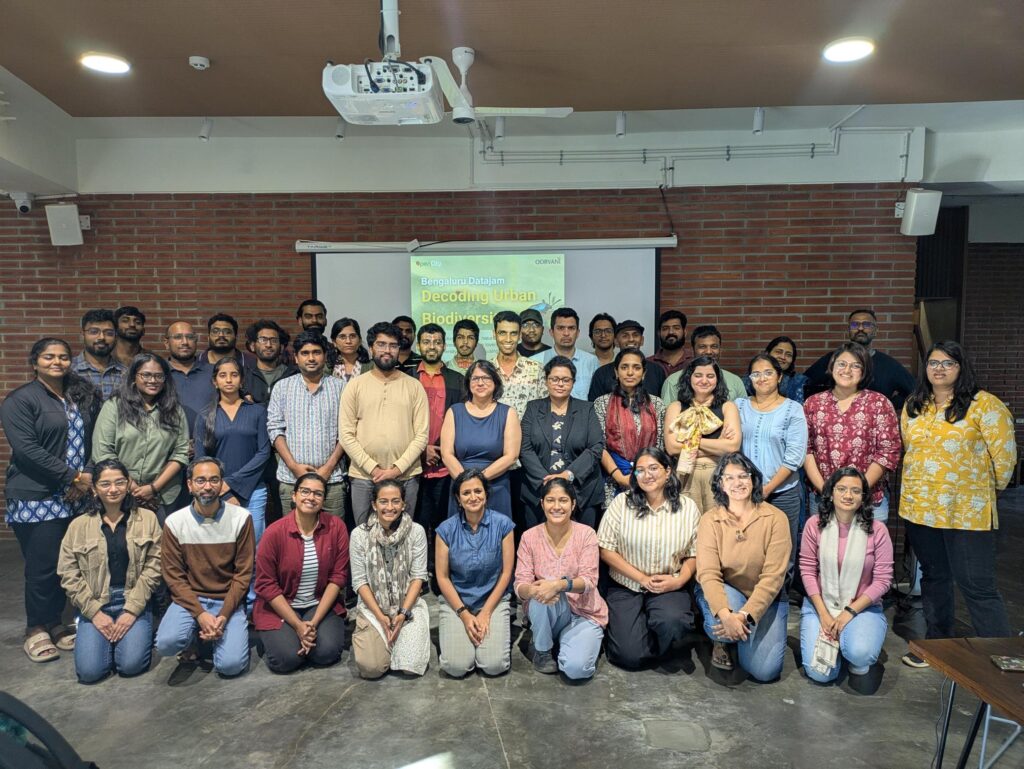
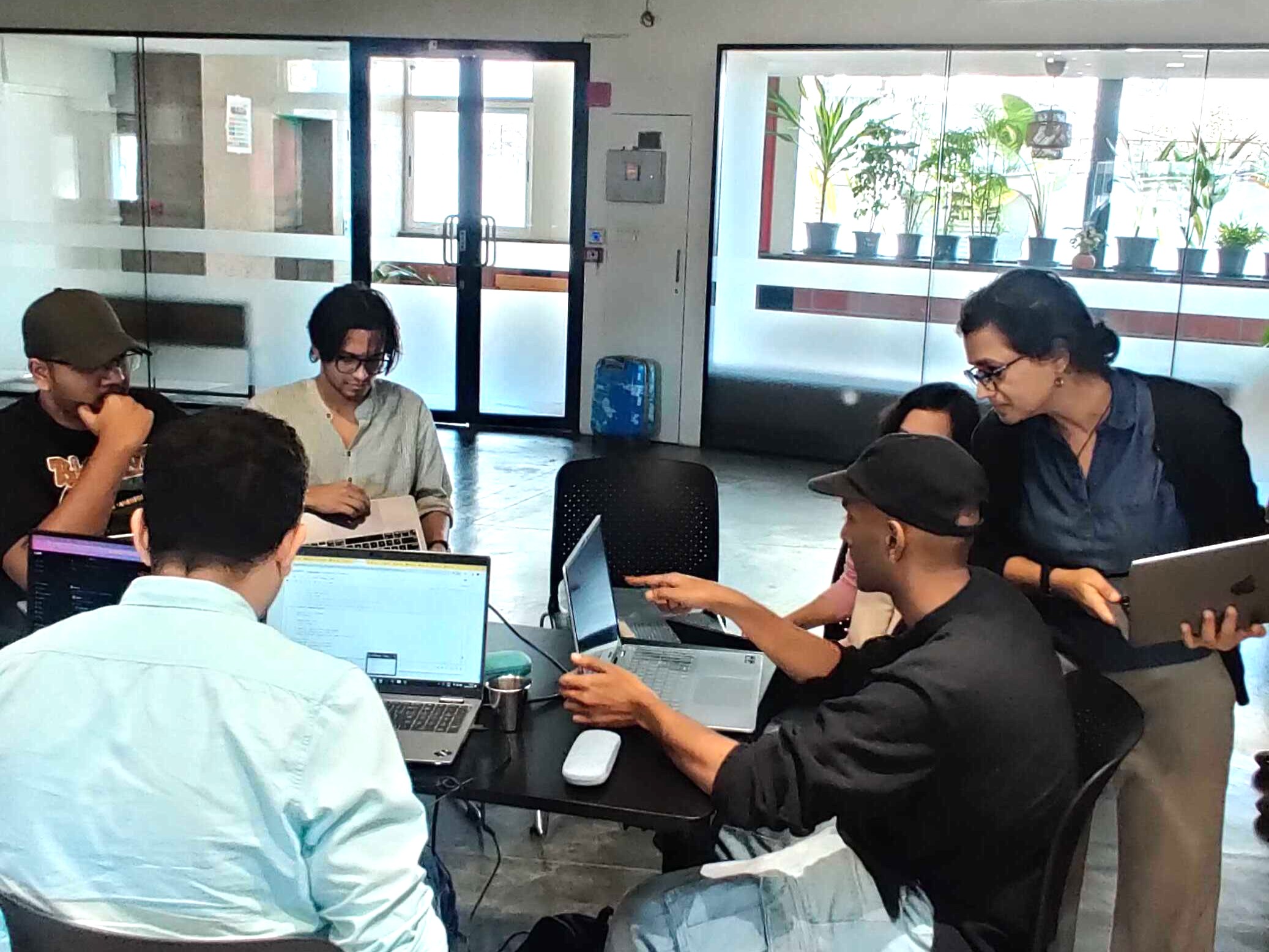
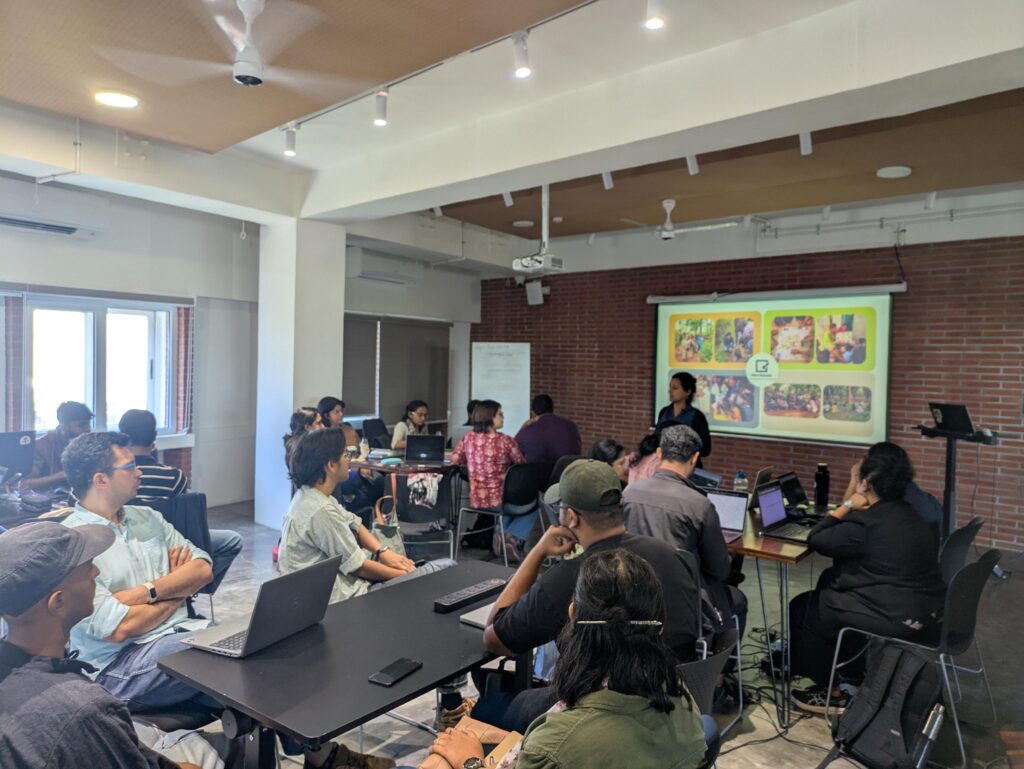
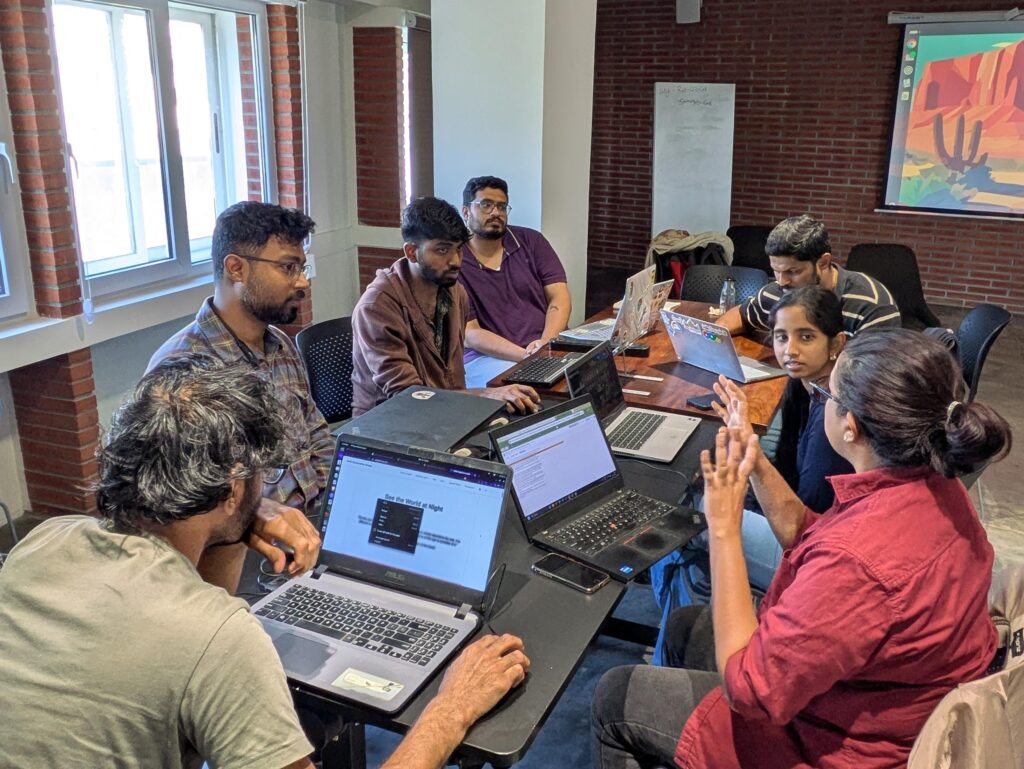
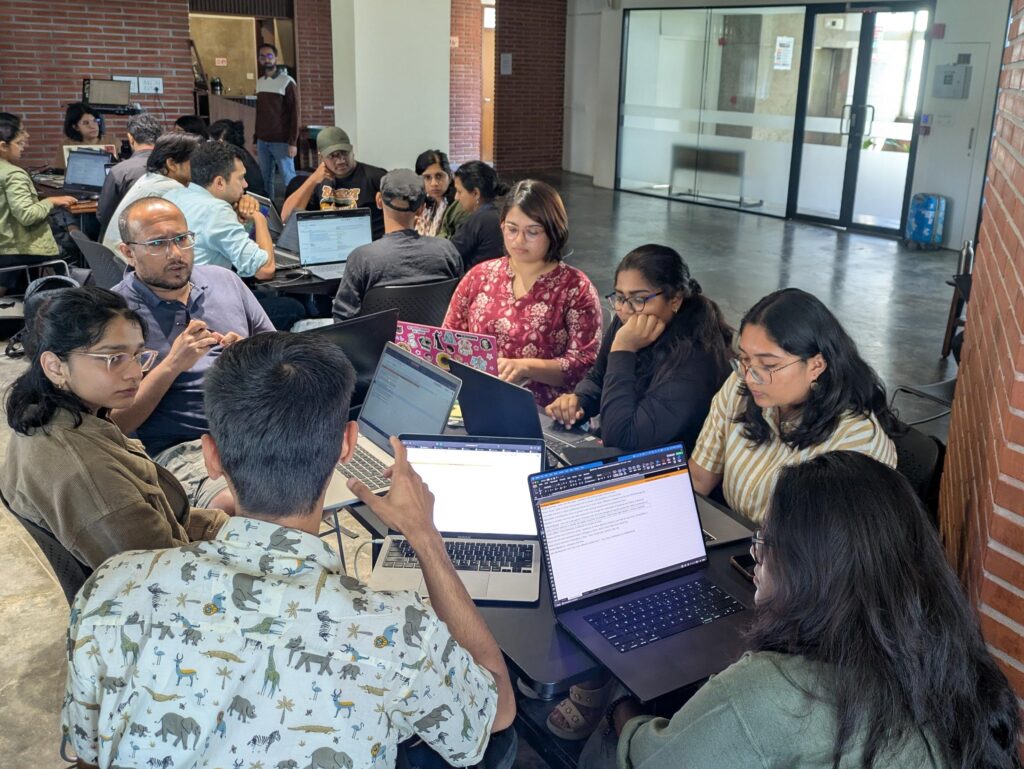
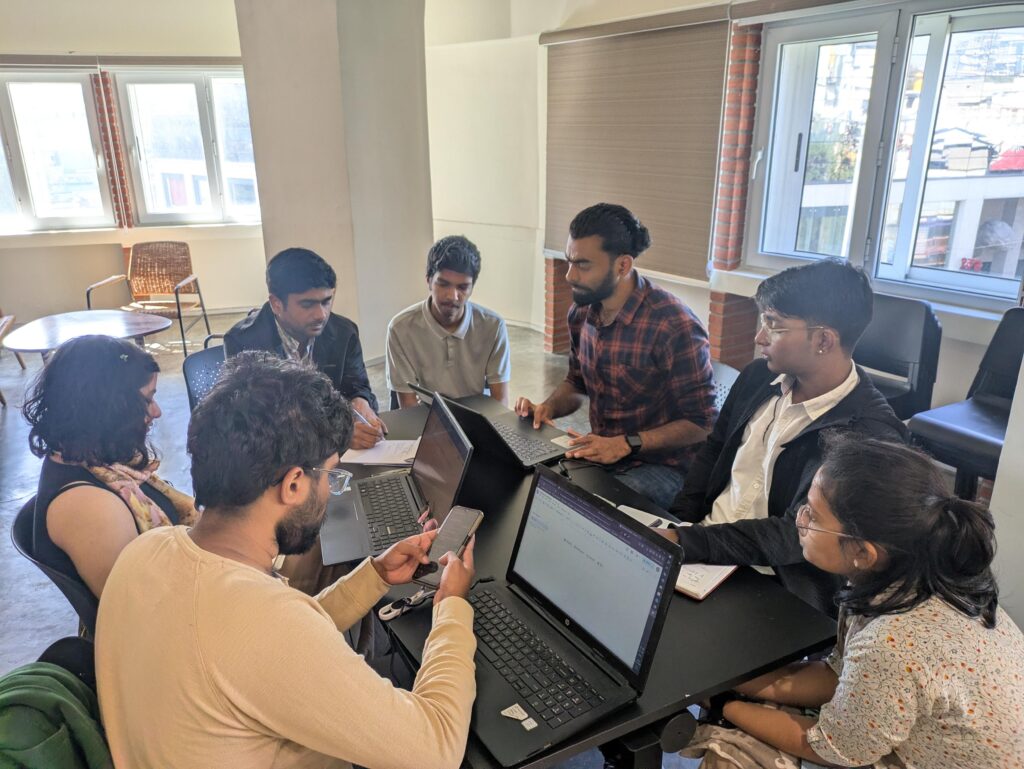
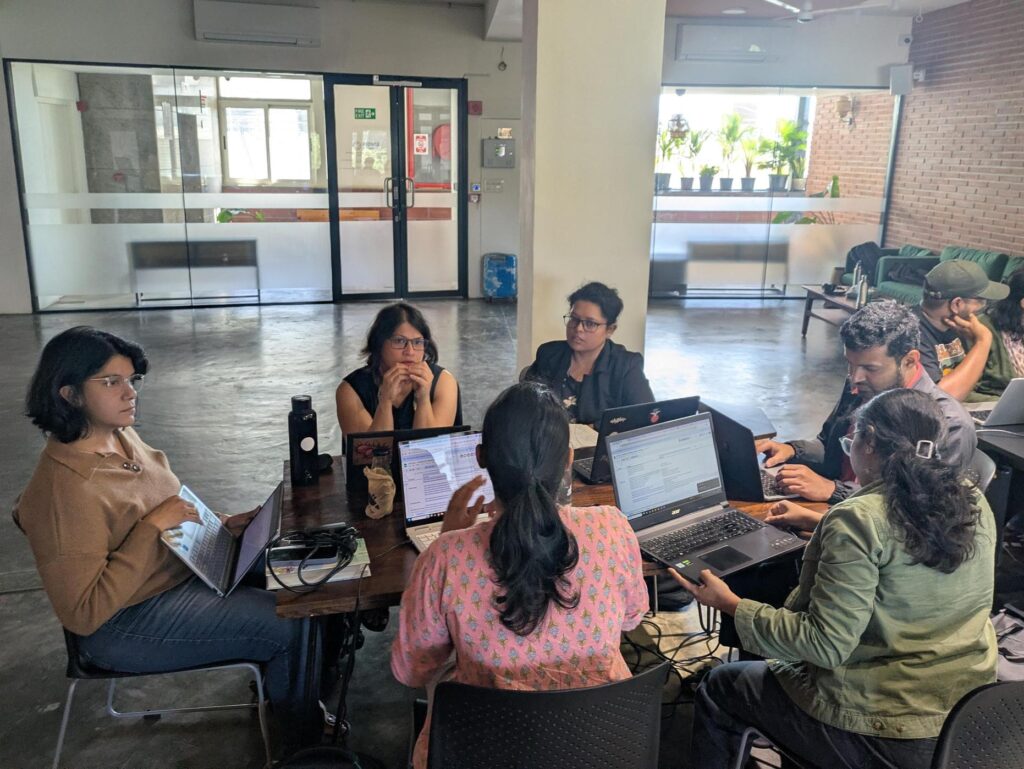
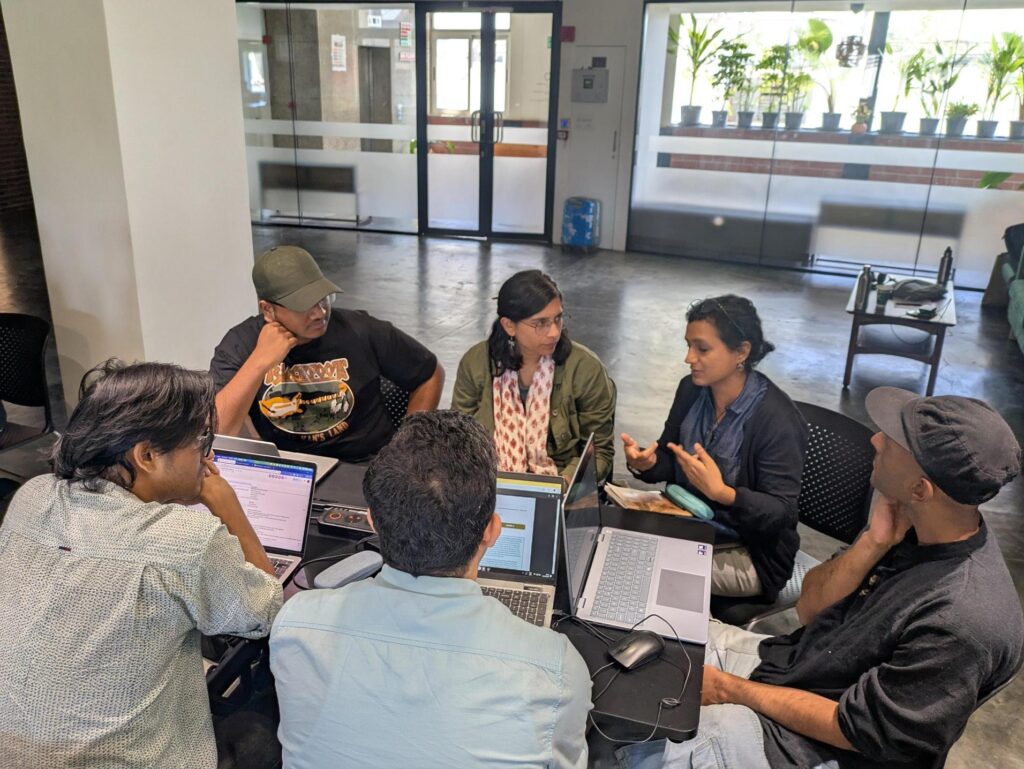
In the day long event, 33 participants from diverse backgrounds – naturalists, ecologists, nature educators, GIS experts, urban planners, architects and data experts – split across five teams looked at citizen science data to correlate it with public data like land use, vegetation, satellite images, open data on natural ecosystems to track how the city is changing and how biodiversity is able to adapt to these changes.
Problem statements
The teams tried to answer the following problem statements:
- How have large university campuses like Bangalore University, IISc, GKVK and IIM-B changed in the last decade and if it has affected the biodiversity and its abundance in these areas?
- What is the state of urban biodiversity in and around lakes of Bengaluru?
- Has there been a change in the observation of pollinator species – insects as well as birds in Bengaluru over the past decade?
- Where are citizen scientists observing biodiversity in Bengaluru, and how has it changed over time?
- Are so-called “wastelands” functioning as overlooked biodiversity habitats across urban and peri-urban Bengaluru?
Outputs
Bird abundance across educational campuses
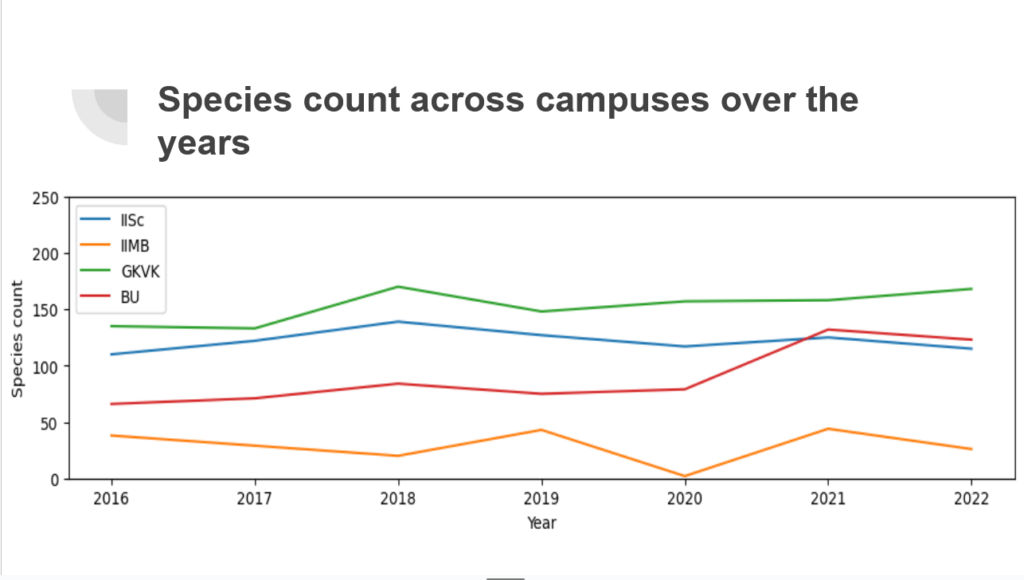
Bhargav, Chandrima, Janhavi, Priyanka, Shruti and Subhasmita looked at how large educational campuses like Bangalore University, IISc, GKVK and IIMB have fared when it comes to bird abundance, and if there has been any change over time.
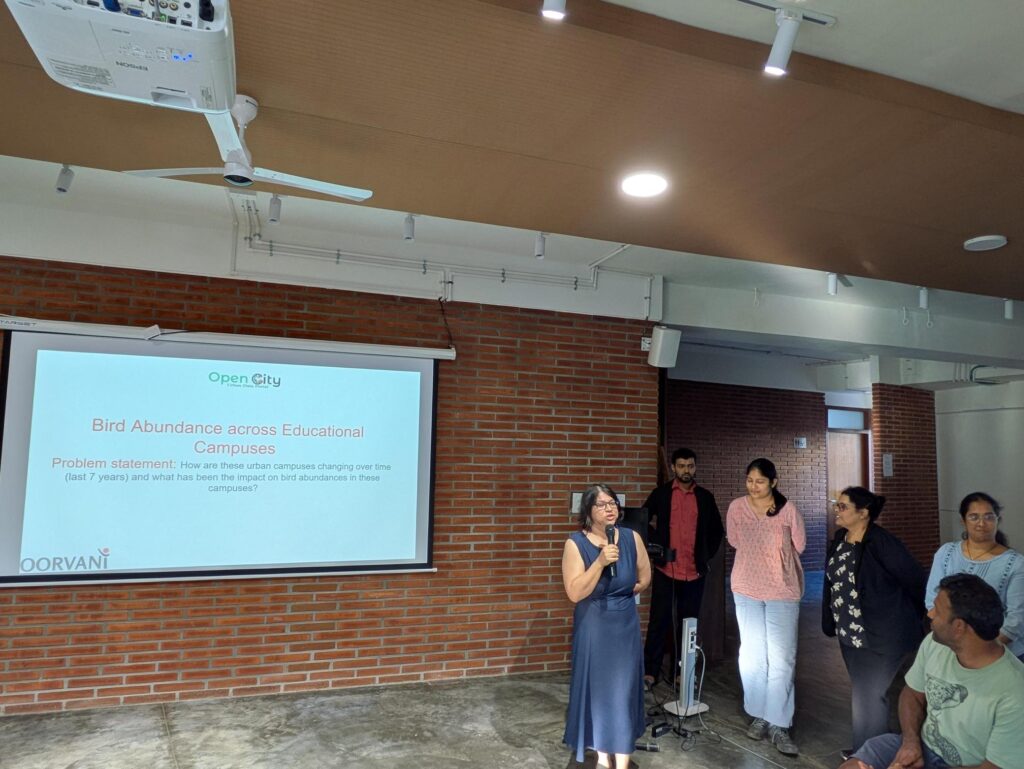
The team noted that most of these large green-covered educational campuses have seen construction over the past five years which has led to a reduction in the green cover at multiple parts of the campuses.
However, the effects of these losses have not yet been seen on the bird abundance which has remained constant. They recommended that more data is needed from campuses, especially closed ones like IISc and IIMB.
Lake environments of Bengaluru
Team comprising Aakarsh, Anoop, Anshu, Karthik, Sachin, Sindhuja and Vena analysed the factors affecting biodiversity in and around lakes. They sought to answer if the biodiversity around lakes has been changing in the recent years.
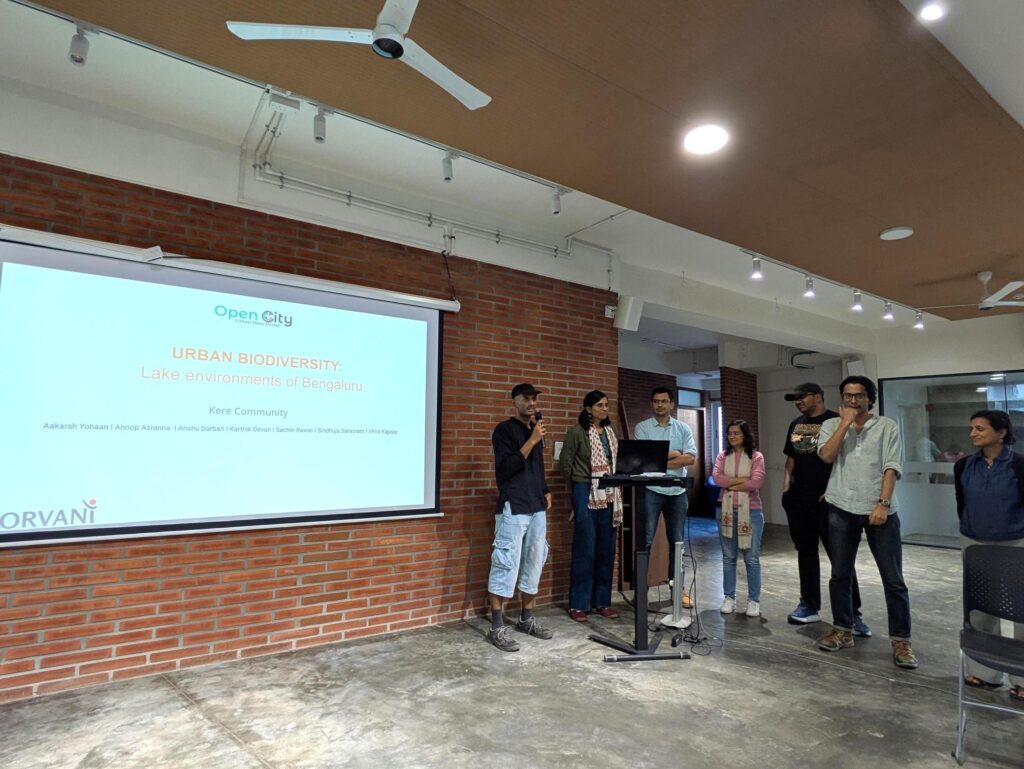
For the purpose of their analysis, they considered five lakes – Lalbagh, Jakkur, Sankey tank, Saul Kere and Varthur Lake. They looked for species count in these lakes as well as whether numbers of indicator species like spot-billed ducks and spot-billed pelicans have changed over time.
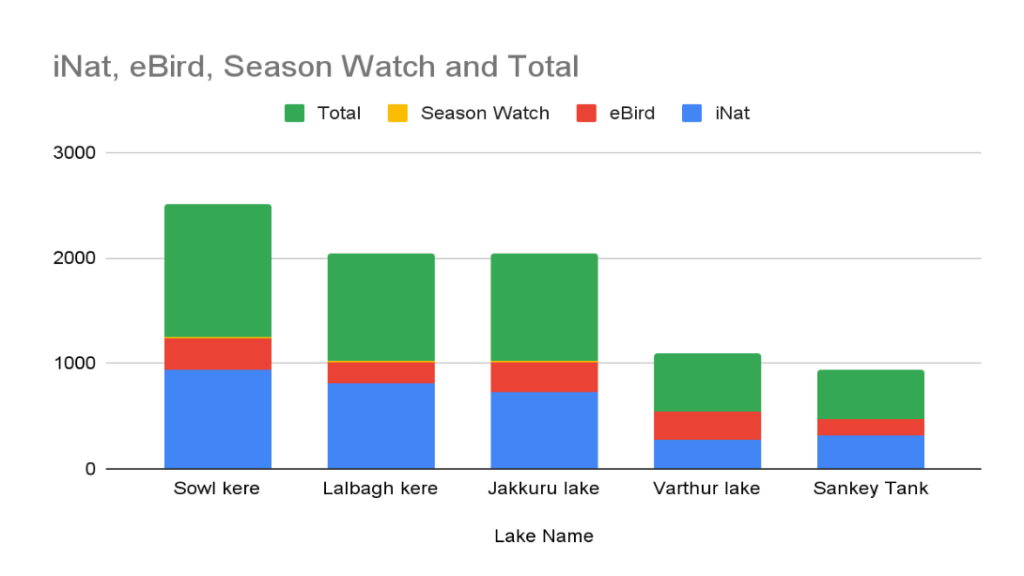
They noted that while the numbers initially increased as more enthusiasts showed up to add numbers to citizen science databases, notable changes were seen with Saul Kere and Sankey tank.
Where are the pollinators?
Bindu, Ekansh, Sharad, Tulika, Urmila and Vaibhavi looked at data to analyse if there is a noticeable change in the number of pollinators in Bengaluru district.
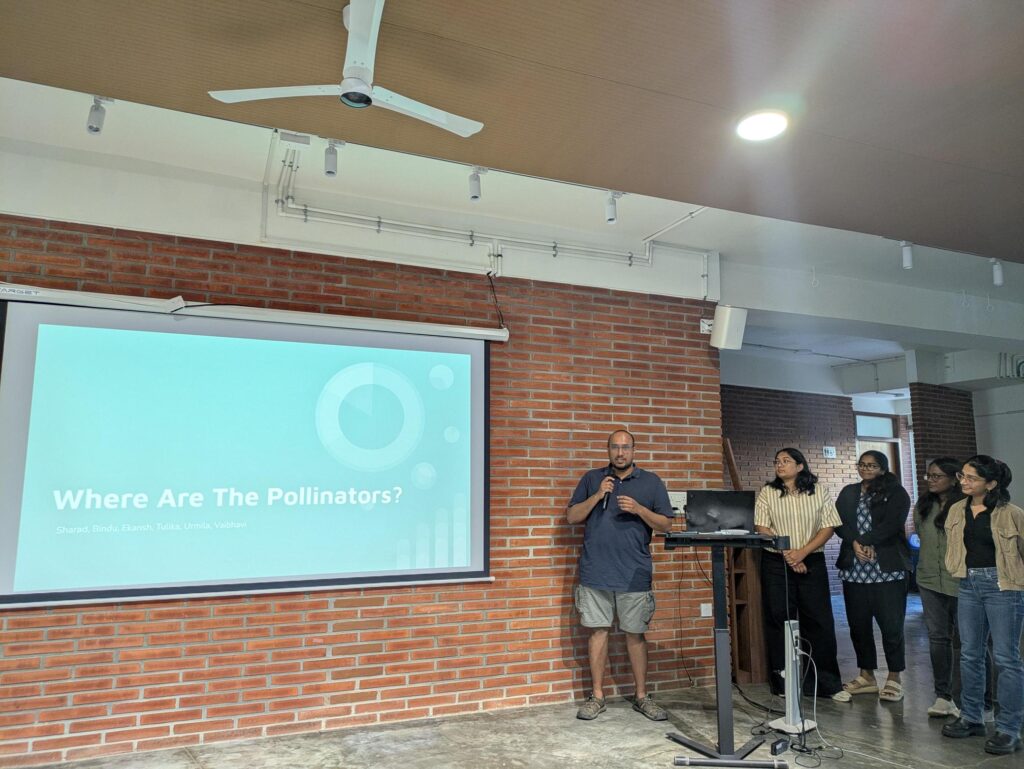
The team noted that pollinator observations have increased over time, mainly owing to more people adding data to the databases. The observations also cover most of the city.
However, when the team looked at what proportion of insect observations were different types of pollinators, they found a noticeable decline in butterflies and moths across the city. Moths and butterflies have seen their proportion fall from 60% to less than 40% in a short period of time.
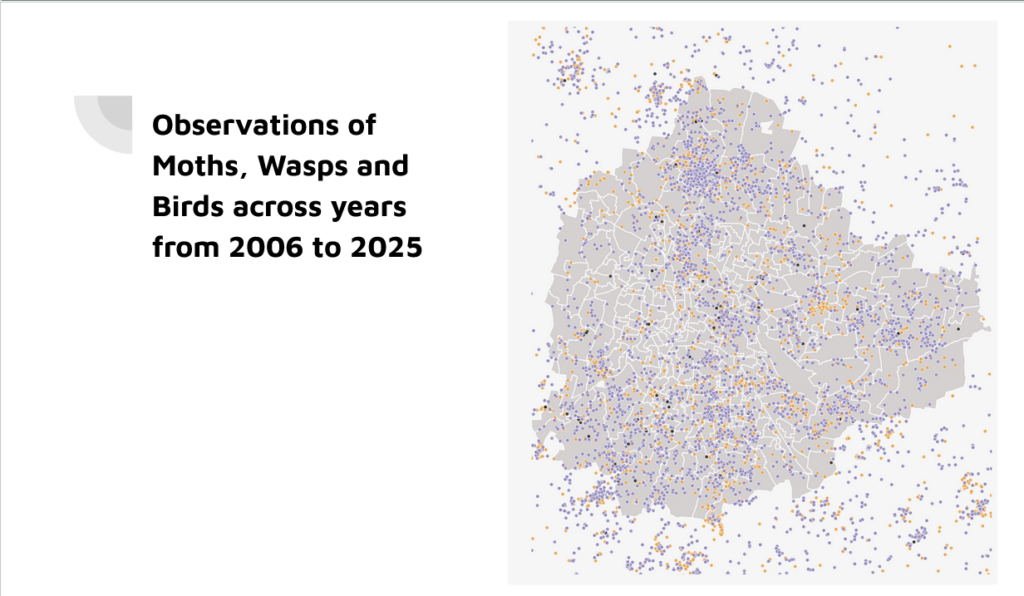
The data on bees showed that the numbers might be declining slowly, or stable for now. However, bees formed only 3-4% of the total observations.
Temporal and spatial patterns of citizens science reporting across Bangalore.
Aditi, Chandrashekar, Mahaadevan, Prahaladha, Shaurabh and Supriya, looked at the nature of observations themselves – their growth over time and space.
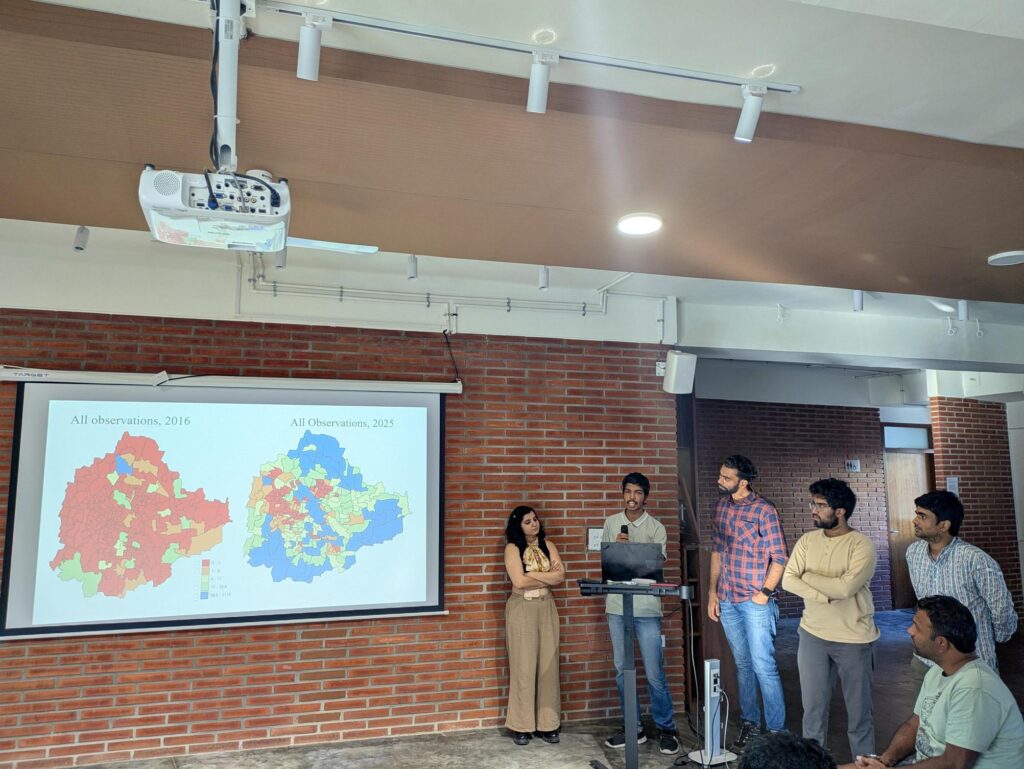
They noted a significant increase in number of observations, with the total growing by more than four times between 2019 and 2024. Most parts of the city are also well covered except for areas like Laggere, Dasarahalli and Peenya.
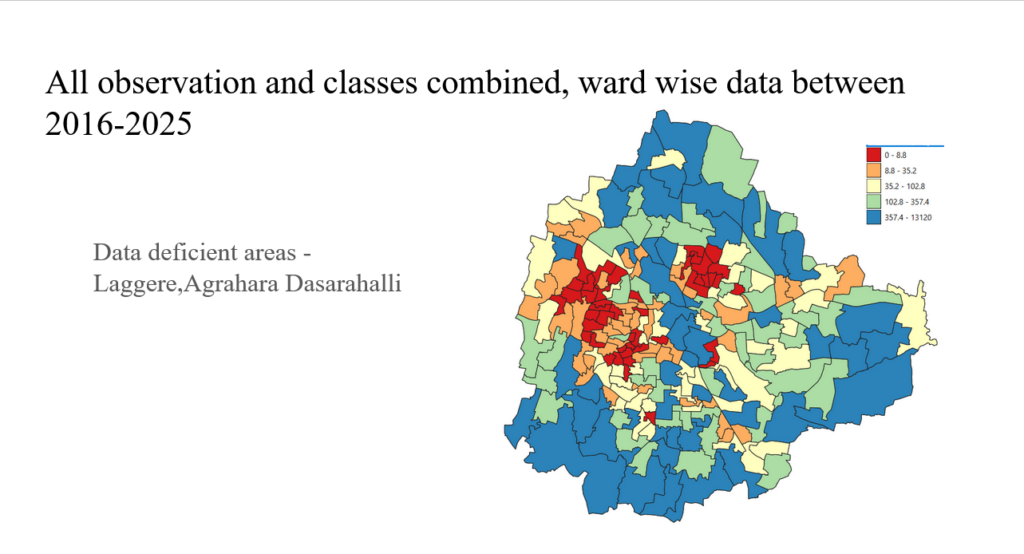
While the actual growth has been phenomenal, the spread across the city has not been as uniform with many older parts of the city seeing little growth in observations. They suggested further analysis with socio-economic characteristics to see if the Luxury effect is in play when it comes to citizen science.
“Wastelands” as overlooked biodiversity habitats across urban and peri-urban Bengaluru
Lakshmi, Nishanth, Paul, Rajat, Shashank, Shivaani and Swaminaatha analyzed the presence of biodiversity in areas classified as “wastelands”. To define wastelands they looked at areas classified as Open Natural Ecosystems (ONEs) in Bengaluru Urban district.
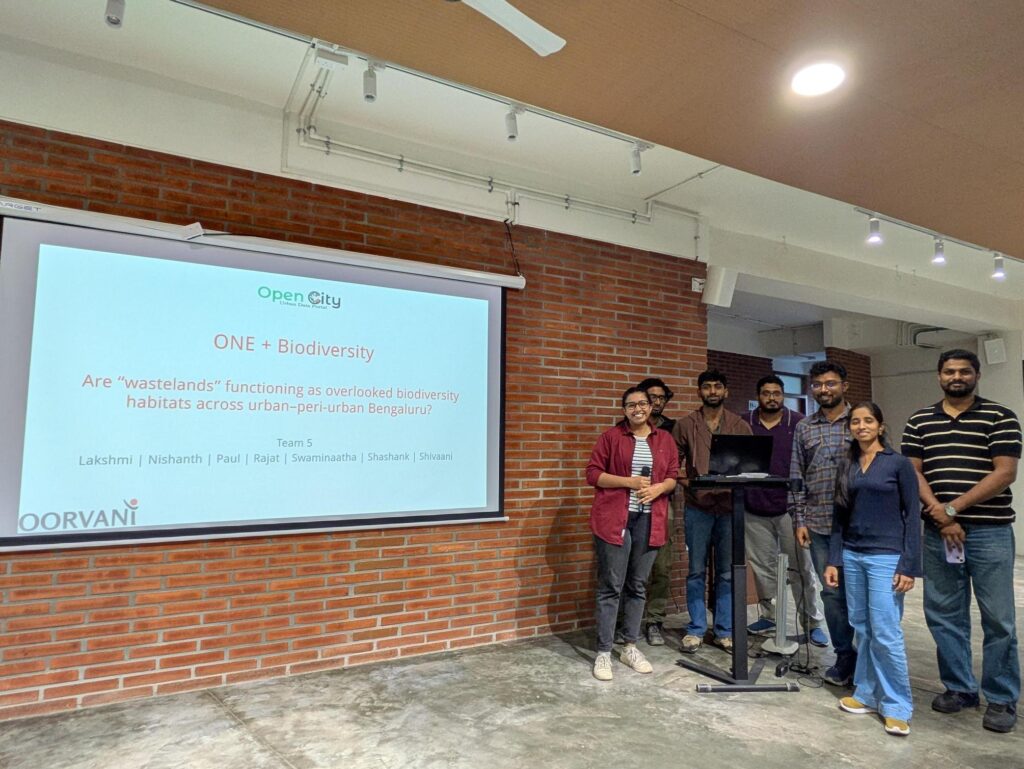
They found that while efforts on bird observations tended to concentrate on central parts of the city, observations on iNaturalist have covered ONE areas in peri-urban Bengaluru and have documented the presence of a vast variety of biodiversity.
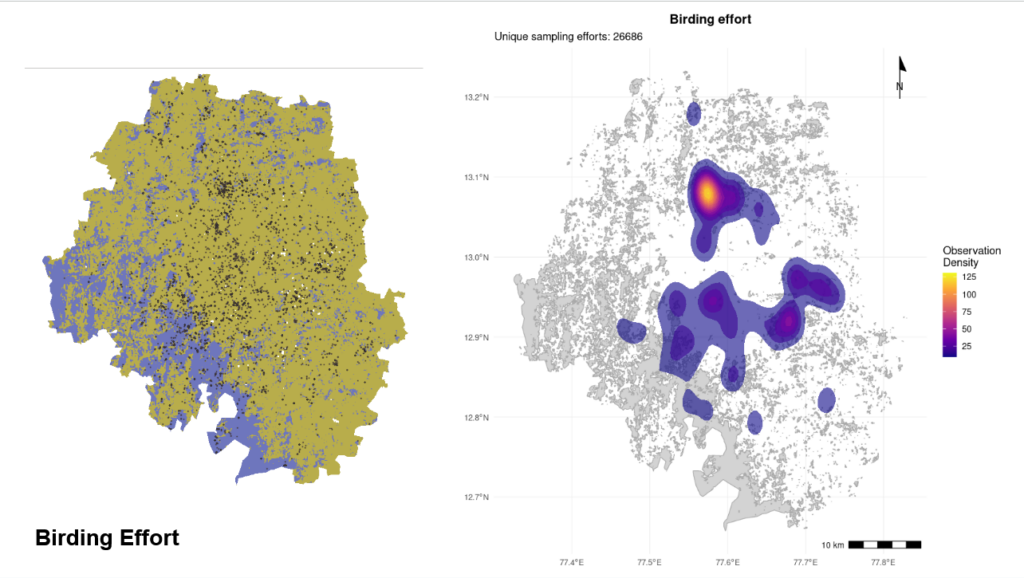
The ONE areas were also seen to be contiguous except in some areas in the south of the district. The team recommended that more effort be put in documenting species, especially birds. Real estate demands are likely to increase pressure on these habitats and development needs to be cognizant of the presence of biodiversity.
Conclusions
All teams in the datajam noted an increase in observations in the last 4-5 years, especially post-Covid. While this is a welcome change, it also presented challenges in understanding the population dynamics of species.
Experts from Bird Count India recommended looking at parameters like abundance and proportion to account for these biases. Based on such accounting, the proportion of butterflies and moths in the insects documented was seen to have declined. The causes could be more identification of other species or an actual decline. However, a similar decline was not noted for bees, which suggests a combination of the two factors.
Large university campuses set within the city are among the last citadels of biodiversity. However, in recent years they have seen large scale construction with infrastructure demands taking priority. Such changes are yet to result in drops in biodiversity but with these spaces becoming isolated islands with little connection to other green areas, the team noted that increased vigilance and data collection is needed.
The more than 300 lakes in Bengaluru Urban district are important biodiversity hotspots, not only harbouring a variety of bird and insect life, but also putting Bengaluru on the global winter-migration map. However, data suggests that indicator species like spot-billed pelicans are declining in most of the large lakes that were considered for analysis.
Open Natural Ecosystems, often dismissed as “wastelands” were seen to be harbouring a large variety of biodiversity. However, efforts towards documenting birds were still restricted largely to the city. One of the important ways to protect these areas is to document the biodiversity there especially given the pressure from real estate development on the peri-urban parts of the city.
Efforts on iNaturalist and eBird observations have been growing across the city, but not all parts have seen similar growth. Older and poorer parts of the city lag behind in documentation, and the luxury effect could be in play here.
Vaidya R, Program Lead, Data at Oorvani Foundation noted that “this exercise was important to help citizens make sense of the wealth of biodiversity within Bengaluru. We now need to take action to ensure that biodiversity is incorporated in urban planning as the city continues to grow.”
According to Alen Alex, BirdCountIndia/Nature Conservation Foundation, “Citizen Science is a community driven effort, but the data mostly ends up being analysed by professionals. Events like the datajam can ensure that people who contributed to generating the data can produce the science as well, in a way democratising science itself.”
Vena Kapoor, Nature Classrooms, felt that “it was a wonderful and useful learning experience for the team at Nature Classrooms to be a part of this collaborative urban biodiversity data jam. We hope to use the data, analyses and questions that emerged as part of this exercise in our educator capacity building workshops and community engagements, and to create Bengaluru focused nature-based teaching-learning tools.”
For the participants it was a learning experience about the city itself and an opportunity to see the city through a different lens. “It’s amazing that an event like this exists. In a few hours, we have learnt more about Bengaluru than we ever knew before. We definitely need more datajams in India,” opined Tulika Khargonkar, a participant.