
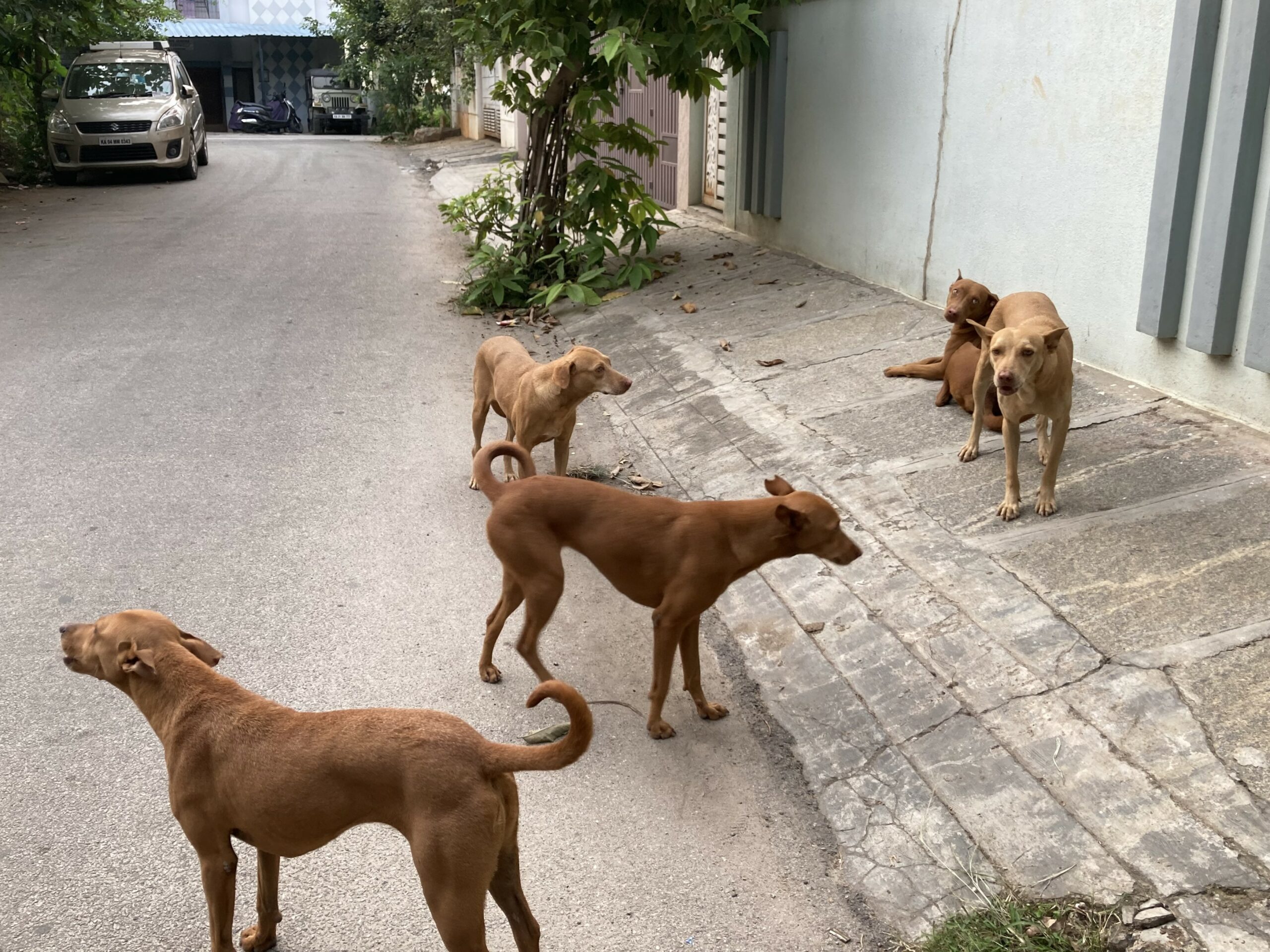
The Bruhanmumbai Municipal Corporation (BMC) the governing Urban Local Body(ULB) for Mumbai conducted a street dogs survey in 2024 in collaboration with Humane Society International/India. The survey estimated the number of street dogs living in Mumbai, the proportion of them sterilized and compared the findings to their equivalent numbers in 2014.
The survey also looked at the number of collared dogs roaming the streets as well as cats. You can find the survey report as well as key tables as csvs here.
Survey methodology
A survey method called “Survey Design, Methods and Protocols” was used, which was the same as what was employed in 2014. Survey routes, averaging 20 to 30 km per ward were drawn using mapping software like Google maps.
The survey was conducted early in the morning, starting at dawn. The survey team comprised a driver and an observer on a two-wheeler who followed the predetermined routes.
Dogs sighted were recorded with location as well as details including – sex, sterilization status, and whether lactating in the case of females. Pups were also recorded, defined as too young to be sterilized, but their sex was not recorded. Visible health issues like skin diseases or body conditions were also recorded.
Based on this data, dog density (number of dogs per km), composition (sterilization status, sex), number of collared dogs and health status were derived at ward as well as city level.
The survey was conducted across the 24 wards covering a total of 930 km of the total 2354 km of roads in Mumbai.
Number of dogs
The survey estimated the total number of dogs to be 90,757 in the entire island of Mumbai. Of these, 21,000 were estimated to be living in slums, and the rest on streets. There were 3 male dogs for every 2 female dogs, and 7.1% of the total dogs were lactating females while 4.3% were pups.
In 2014, the number of dogs estimated was 95,172 which marks a decrease of 4.64% over the ten years.
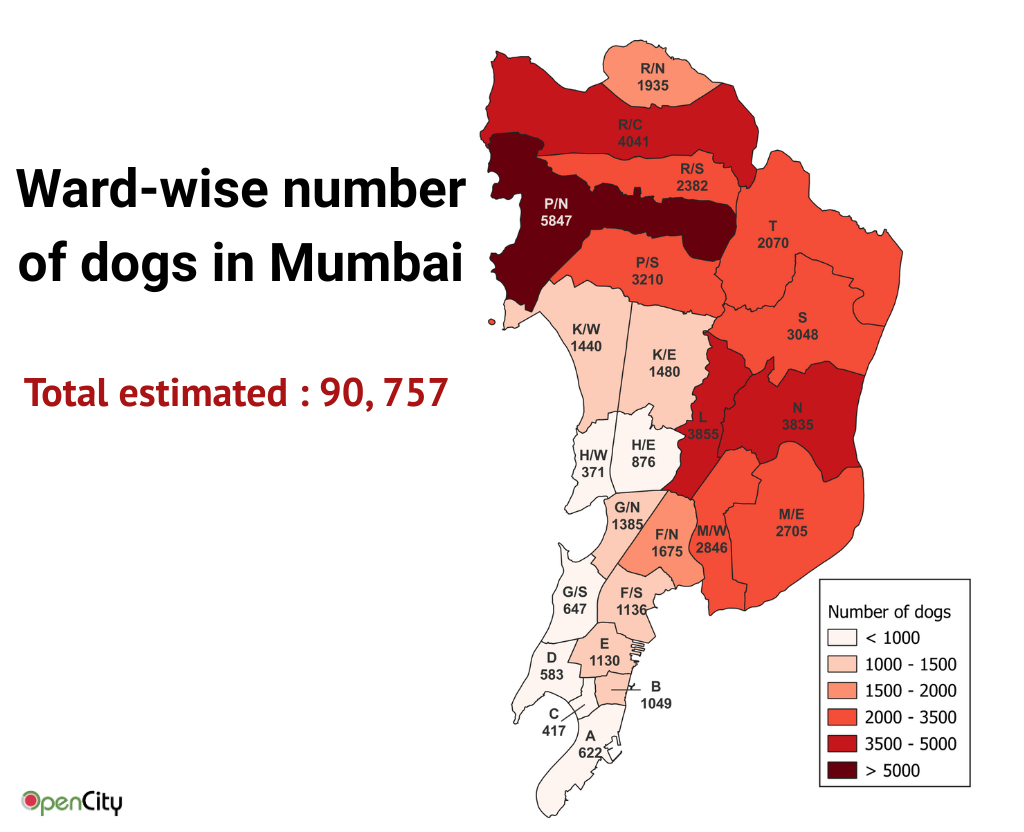
The northern wards which are larger had a higher number of dogs, especially P North and R Central. The eastern wards, L and N also had a high number of dogs. The southern wards had much fewer dogs, less than or just above 1000 in most of them.
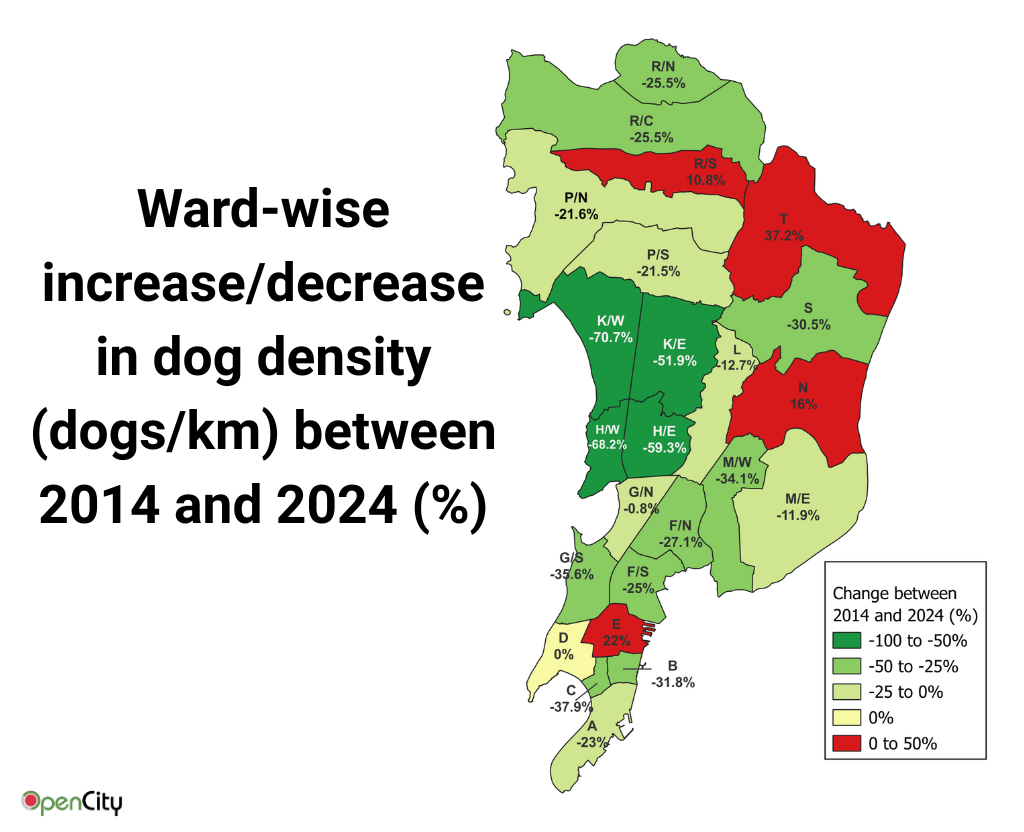
A decrease in density of dogs (measured as dogs per kilometre) compared to 2014 was seen across most wards, with the central wards showing the highest decrease. However, R South, T, N and E wards showed an increase in the density of dogs.
Sterilization status
The overall sterilization status across Mumbai stood at 62.9%. However, there was wide variance seen between the wards. While some of the southern wards topped 80%, some wards in the northern ends were under 50%. In the central wards, the percentage was in the 60s, suggesting scope for significant improvement across the suburbs of Mumbai.
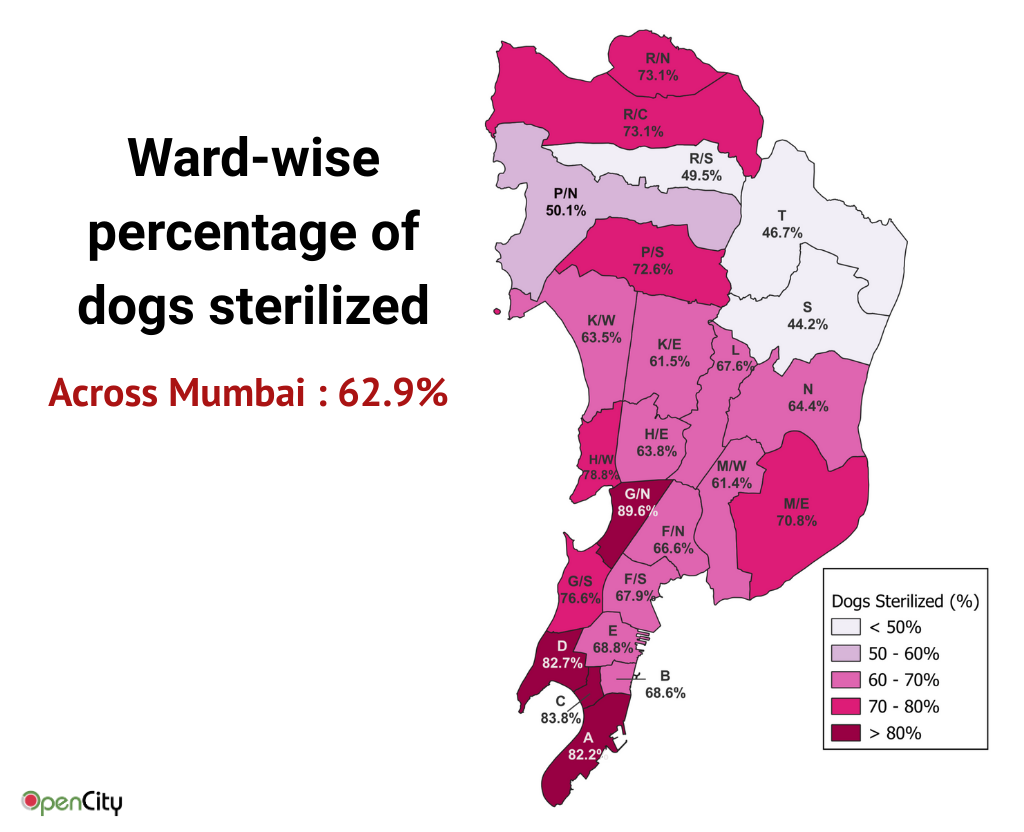
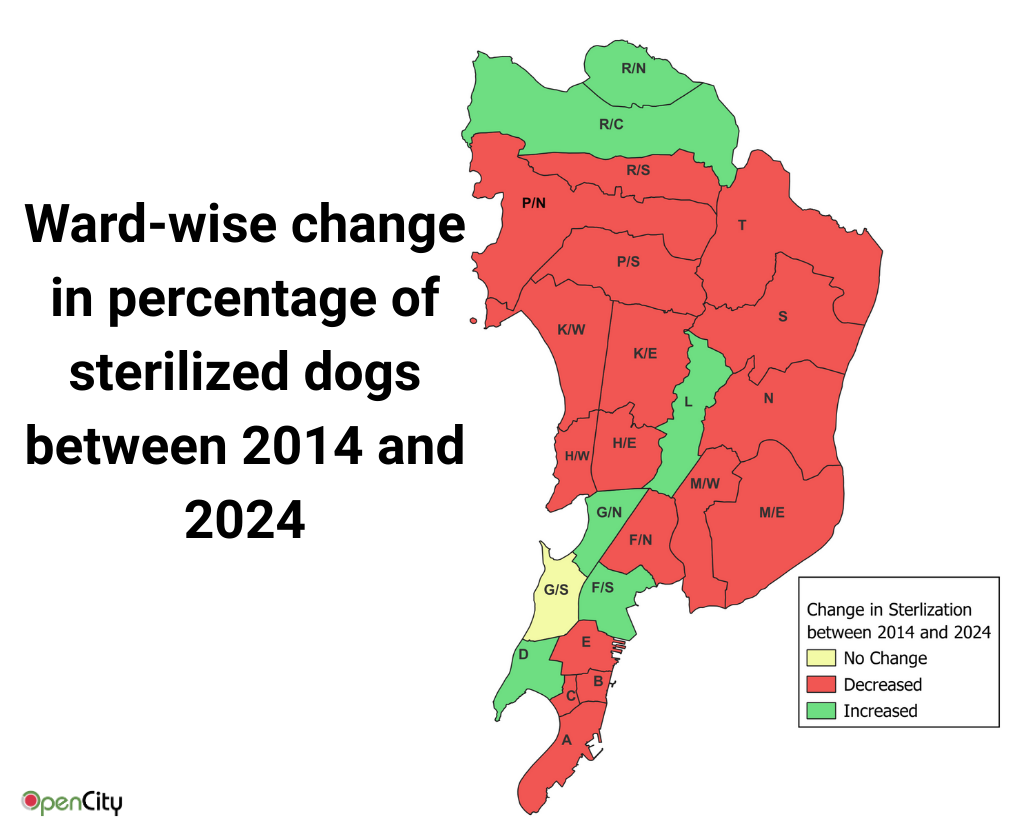
The survey also found that across 18 of the 24 wards the levels of sterilization has decreased in the ten years between 2014 and 2024.
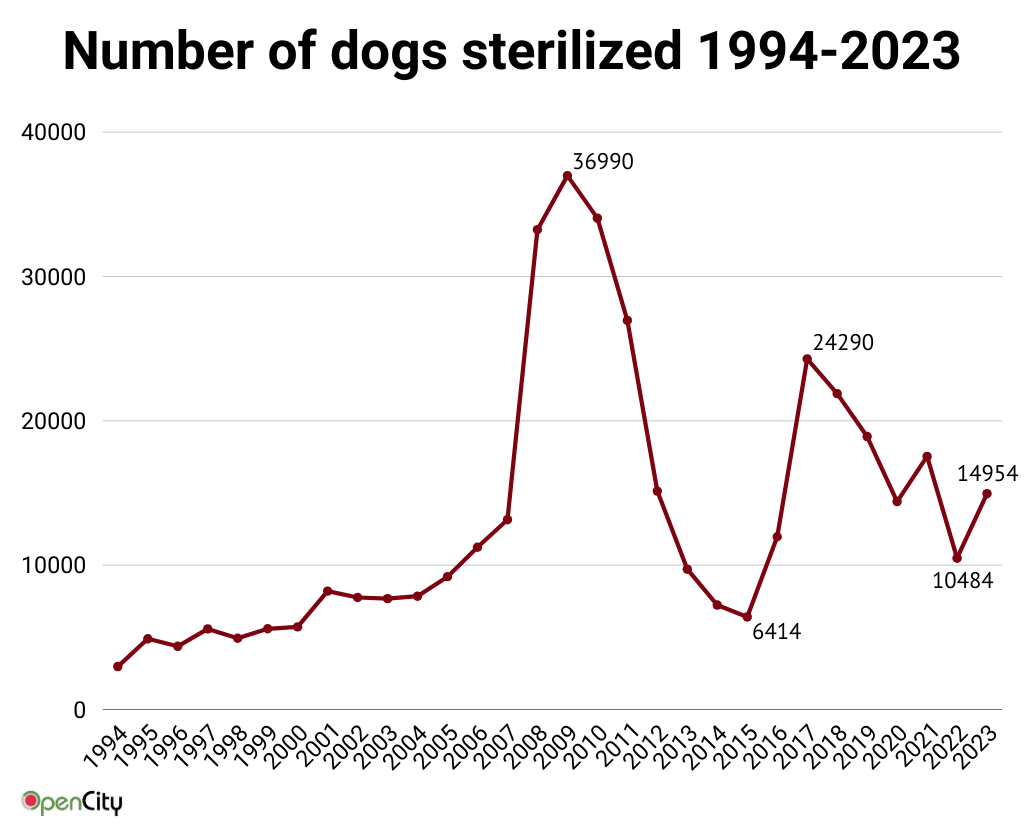
The report shows that the number of dogs sterilized over the years has varied widely, characterized by rapid ramp-ups and equally rapid ramp downs. Starting in 1994, the numbers increased gradually before shooting up in 2008, crossing 30000 every year till 2010, before declining precipitously to a low of 6414 in 2015. Since then the trend has generally been marked by significant increases or decreases with little consistency.
Given the recent rulings from the Supreme Court, and the debates they have triggered, it is important that ULBs have an estimate of the number of street dogs in their jurisdiction and the status of sterilization. Ward-level data helps understand in detail where efforts need to be targeted.
The report also shows that sterilization numbers need to ramp up and remain consistent to ensure the population stays under control. Having a helpline or portal where people can log the presence of unsterilized dogs, lactating females and pups can help ULBs precisely target sterilization and control the population of street dogs in their cities.