
Can Bengaluru Survive Its Data Centre Boom?
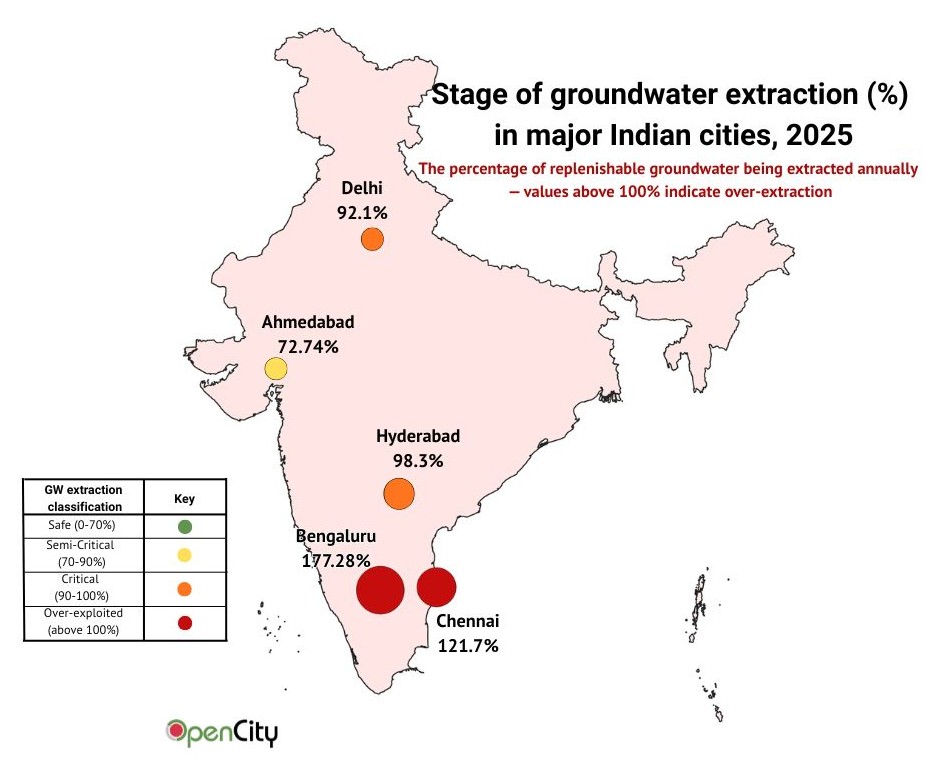
Many of India’s metro cities face some type of water stress every year. Bengaluru might be the biggest victim to water stress. Due to the city’s landlocked location, situated far away from any major water source, the city relies heavily on its groundwater and its 100km pipe connected to the river Kaveri. Using data from the National Compilation on Dynamic Ground Water Resources of India 2025, we examined how metro cities in India use their groundwater resource. Bengaluru is extracting groundwater at 177% of what nature can replenish. Its net availability for the future is effectively zero. Among all major Indian cities tracked in the report, Bengaluru is the most water-stressed.
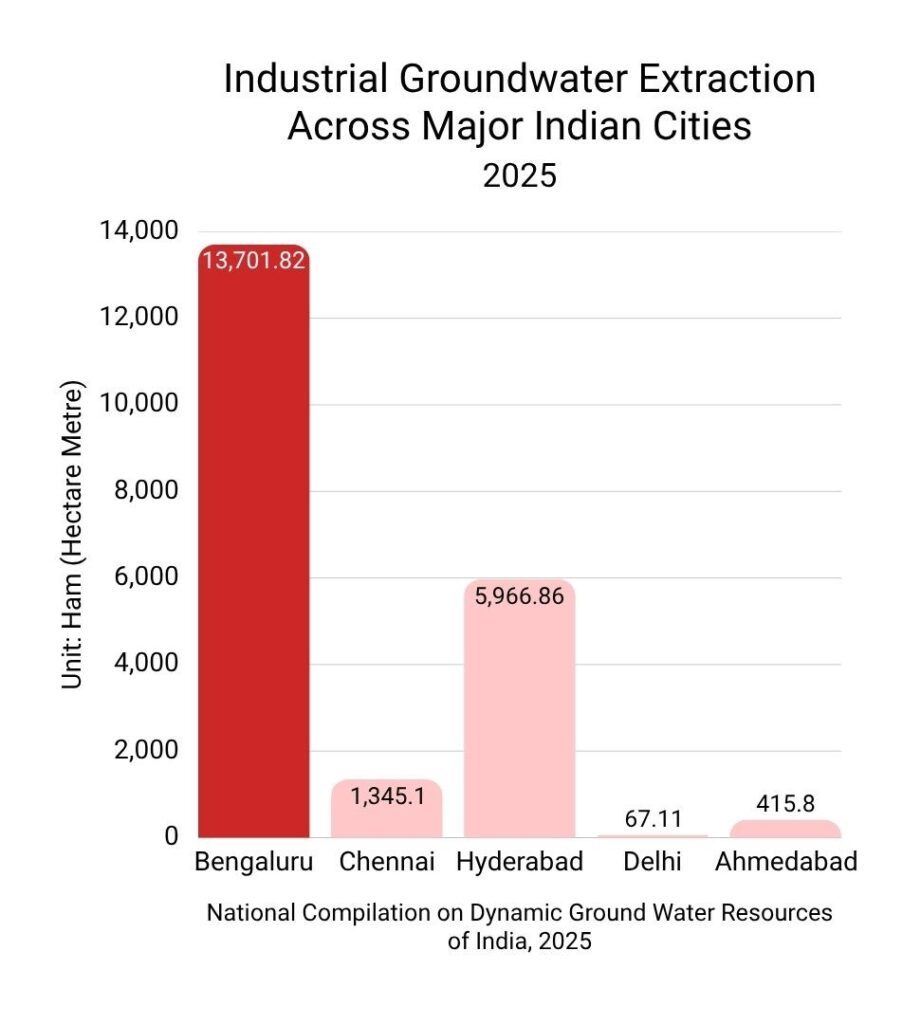
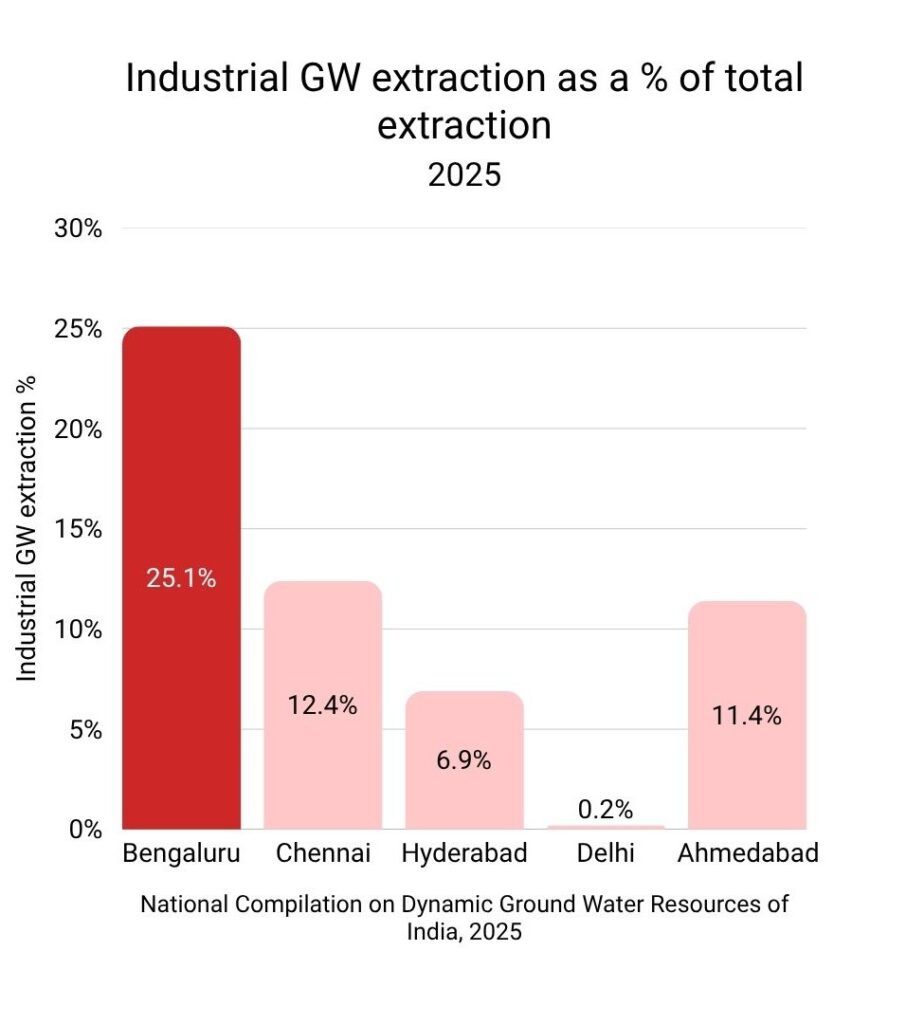
One of the biggest consumers of water in Bengaluru is for industrial use. 2025 saw 13,700 Ham (Hectare Metre) of water being used for industrial use in the city. Compare that to 6,000 Ham for Hyderabad and 1,350 Ham in Chennai. This means that 25% of Bengaluru’s groundwater availability goes into industrial use. 12.4% in Chennai and 11.4% in Ahmedabad are still worrying numbers, but the comparison to Bengaluru is unmatched.
Despite this, there are growing demands for water intensive infrastructure in the city, especially when you consider it as the country’s Silicon Valley. With the world being swept off its feet by Artificial Intelligence and the data centres required to host it, it’s clear why some people are worried about the future of Bengaluru’s water. The city currently has 31 operational data centres. Independent researchers suggest these data centres could be consuming around 20 million litres per day. This extreme industrial footprint reflects decades of tech infrastructure being built on top of a city with no perennial river, dependent almost entirely on groundwater and a distant Kaveri pipeline.
Karnataka’s Policy Framework
Karnataka is aware of the problem. In March 2026, IT Minister Priyank Kharge told the state assembly that hyperscale data centres may not be suitable for Bengaluru due to constraints around water availability. Calling the existing, three-year-old, data centre policy overdue for revision, the government is said to be considering a policy, with treated wastewater being explored as an alternative supply for these facilities. With demand for data infrastructure only growing, the question is whether policy can keep pace with the industry building on top of it.